Deep hip and buttock pain — non-surgical treatment options
Gluteal tendinopathy is one of the most common causes of persistent lateral hip pain. It responds well to minimally invasive treatment — no surgery, no general anesthesia.
Find a Specialist Learn About TenJet®In Their Words
Gluteal tendinopathy is one of several conditions TenJet addresses. This patient describes their experience with the procedure.
TenJet Patient Testimonial
Video courtesy of HydroCision, Inc., the maker of TenJet®. Individual results vary; this patient's experience is not a guarantee of outcome. Talk with a specialist about whether the procedure is appropriate for you.
Gluteal tendinopathy is degeneration of the gluteal tendons — the thick connective tissue that attaches your gluteal muscles (gluteus medius and minimus) to the greater trochanter of the hip bone. Unlike a tendon tear, tendinopathy involves microscopic breakdown of tendon fibers without full rupture.
It is often misdiagnosed as greater trochanteric bursitis. In most cases, the bursa itself is not the primary problem — imaging studies consistently show the gluteal tendons as the primary pain source.
TenJet® by HydroCision is a minimally invasive procedure that removes degenerated tendon tissue without open surgery. It is performed in a clinic or office setting under local anesthesia and takes approximately 15 minutes.
Learn more at the official HydroCision product page: hydrocision.com/product/tenjet/
Official demonstration video from HydroCision, the maker of TenJet, plus a look at how tendinitis differs from the deeper tissue degeneration TenJet is designed to treat.
TenJet Gluteal Tendinopathy Minimally Invasive Tenotomy


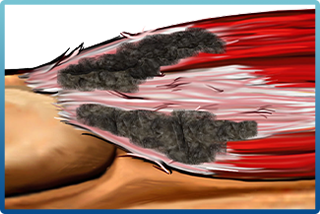
Diagrams and video courtesy of HydroCision, Inc.
Common Questions
Often what is labelled bursitis is actually gluteal tendon degeneration. Research indicates the bursa is frequently a minor participant, which is why bursa-directed treatment can disappoint.
Typically on the outer hip over the bony prominence, often worse lying on that side at night or after prolonged standing, and sometimes referring down the outside of the thigh.
A percutaneous, ultrasound-guided procedure performed through a small incision under local anesthetic, targeting the degenerated portion of the gluteal tendon.
Night pain often improves as the tendon settles, but the timeline varies widely between patients. Your physician can give a more specific expectation from your imaging.
This information is general and is not medical advice. Whether any procedure is appropriate for you can only be determined by a physician who has examined you and reviewed your imaging.